TV



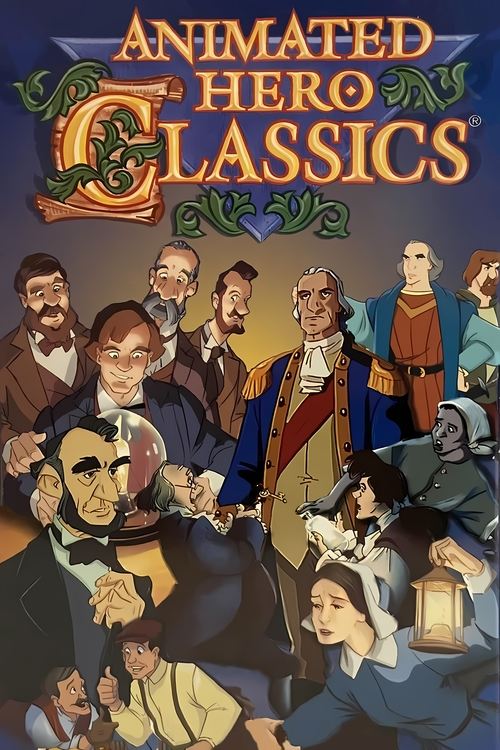
Animated Hero Classics is an educational Animated television series of programs co-produced by Nest Family Entertainment and Warner Bros. The series, geared toward elementary school aged children, includes twenty biographies of both female and male scientists, inventors, explorers, and social champions from around Europe, North America and the Middle East, including George Washington, Abraham Lincoln, Florence Nightingale, Harriet Tubman, Joan of Arc, Benjamin Franklin, Helen Keller, Marco Polo, Marie Curie and Louis Pasteur. The Children's Television Act of 1990 required terrestrial television networks to devote time to Educational and Informative programming for children. Even though Warner Bros' cable networks were not directly affected by these requirements, these programs were debuted on their HBO network's Saturday morning children's block as a show of good faith that the network was committed to quality educational programming for children. The dramatic biographies were meticulously researched by the producers and written to engage both children and adults, providing an entertaining and accessible way to learn about the positive impact that these women and men have had on our world.
Even as a young boy, Beethoven marched to the beat of a different drummer. Trained in the traditional music methods by his father, Beethoven was an accomplished pianist by the age of 12. But he yearned to try new sounds and persevered until audiences heard his music. By his early twenties, this persistent young man performed for Joseph Haydn, who compared him to the great Mozart. Sadly, Beethoven began to lose his hearing, but he threw himself even more deeply into his music, composing "Fur Elise," "Sonata Pathetique" and the dramatic "Fifth Symphony" years later, audience members heard what he could not and leapt to their feet in ecstatic appreciation for such passionate music. His creativity gave the world then, as it does today, music that stirs the soul. The video begins in 1827 with 30,000 people paying tribute to the great Beethoven in Vienna, Austria. Then the video switches to his life as a child. Beethoven was driven by his father without patience and love to practice playing the music of Mozart and Haydn on the piano; however, Beethoven preferred to improvise and play his own style of music. This enraged his father as it did many symphony patrons later in life. Beethoven was honored to be asked to move to Vienna and have Haydn as his instructor. After years of playing for royalty, Beethoven was frustrated that all the audiences wished only to hear music from Mozart and Haydn. So, Beethoven decided to move to the countryside where he could compose music as he wished. While living in the countryside, Beethoven noticed his hearing loss was getting more severe and feared going deaf. The world was going through a revolution. The America Colonies threw off the British Empire, and common people replaced the King and Queen of France. Beethoven believed that since the world was changing all around him that music should change also. Beethoven's performances were not embraced by the majority because of his visceral style and the war going on around him; however, Beethoven never gave up despite his despair and lack of encouragement. His courage to keep writing from the heart and his desire to play from the heart would eventually be accepted by the world. As a tribute to the soldiers, Beethoven was commissioned to write a symphony in honor of Wellington's victory over Napoleon. "The Wellington's Victory" was a favorite of the people of Vienna even though it was not one of Beethoven's favorites. Tragically, Beethoven's success could not be enjoyed. His health was fading quickly. In his last days, Beethoven finally wrote the symphony that touched his heart. The Ninth Symphony was his final work with the choral music put to Schiller's poem, "Ode to Joy." "Ode to Joy" spoke to the heart with words, and Beethoven's Ninth Symphony spoke to the heart with music. Sadly, Beethoven did not conduct his last piece of work because of his complete hearing loss. The applause was not heard by Beethoven; but the sight of the audience standing and continually applauding was Beethoven's acknowledgment of the appreciation felt by the Vienna people and the world.
 Angel Studios
Check off episodes as you watch (saved in browser — sign in anytime to sync).
Dedicated threads unlock on each episode's premiere day. Inline [spoiler] tags stay blurred until clicked.
Sign in to post episode reactions, fan theories, and upvote community dispatches.
Concise 1-sentence dispatches from DidItDrop members.
Recommended titles paired with Animated Hero Classics.